
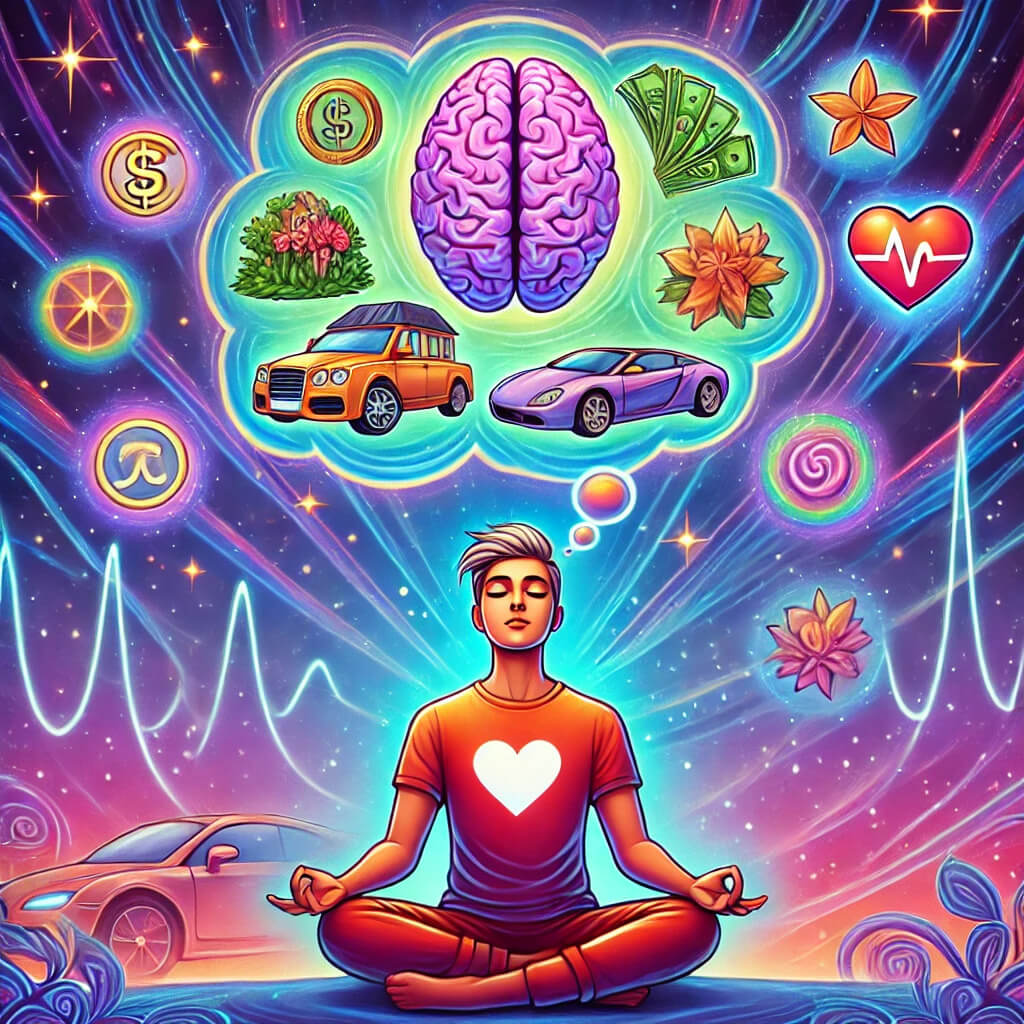
Visualization can be one of the most powerful practices for transforming a desire from a vague idea into a clear inner experience.
However, there is a major difference between casually thinking about what you want and deliberately creating a vivid mental experience of it.
Many people say they visualize every day. Yet when they close their eyes, they may see only brief, blurry images. They might picture a dream home for a few seconds, imagine having more money, or think about driving their ideal car.
Then the visualization ends.
But what if you could make the experience more vivid?
What if, instead of simply looking at your dream in your mind, you could mentally step inside it?
According to manifestation teachings and many personal-development traditions, effective visualization is not just about creating a mental picture. It is about combining imagery, sensory experience, identity, and emotion.
In this guide, you’ll discover how to enhance your visualization practice for manifestation by using three powerful approaches:
- Experience your desired reality through your own eyes.
- See yourself already living or experiencing the result.
- Generate the emotions associated with having what you desire.
Used together, these techniques can make your visualization practice more focused, immersive, and personally meaningful.
If you’re completely new to visualization, start with our foundational guide, The Power of Visualization: A Step-by-Step Guide, to understand the basics before taking your practice further.
Step 1: Visualize Through Your Own Eyes
The first way to enhance visualization is to experience your desired scene from a first-person perspective.
In other words, don’t imagine yourself as a distant character in a movie.
Become the person inside the experience.
Imagine that what you desire is happening right now.
If your goal is to live in a beautiful home, don’t simply picture the outside of the house. Mentally step through the front door.
Look around.
What do you see?
Perhaps sunlight is coming through the windows. Maybe you see the furniture you carefully selected, artwork on the walls, or a view that makes you stop for a moment and appreciate where you are.
Now ask yourself another question:
What would I hear if I were really here?
Maybe you hear the sound of birds outside. Perhaps you hear waves if your dream home is near the ocean. Maybe you hear your family talking in another room or the quiet sound of your morning coffee brewing.
Then continue.
What do you smell?
What can you touch?
What might you taste?
The goal is to move beyond a simple mental photograph and create a richer inner experience.
Use Your Five Senses
One of the easiest ways to make visualization more immersive is to involve the senses.
As you visualize, ask yourself:
- Sight: What can I see around me?
- Sound: What can I hear?
- Touch: What can I physically feel?
- Smell: What scents are present?
- Taste: Is there anything I can taste in this experience?
You don’t need to force every detail. Some people naturally visualize images more easily than sounds or physical sensations.
The important thing is to become more involved in the scene.
For example, imagine that one of your goals is to become a successful public speaker.
Instead of seeing yourself standing on a stage from somewhere in the audience, experience the moment through your own eyes.
Look out at the audience.
See the lights.
Feel the microphone in your hand.
Hear your voice filling the room.
Notice the feeling of standing confidently as people listen to you.
Then imagine finishing your presentation and hearing the applause.
The more specific the experience becomes, the easier it can be to focus your attention on what you are trying to create, achieve, or become.
This approach can also complement other manifestation practices. If you want to deepen the sensory side of your practice, you can explore our guide to the five sensory manifestation modalities.
Why First-Person Visualization Can Feel More Powerful
First-person visualization places you directly inside the scene.
You are not merely observing a future possibility.
You are mentally rehearsing an experience.
This can be especially useful when your goal involves a particular action, skill, conversation, or lifestyle.
Athletes, performers, and other high achievers have also used forms of mental rehearsal to prepare for performance. From a practical perspective, repeatedly imagining yourself handling an experience successfully may help you become more familiar with the situation you want to create.
From a manifestation perspective, many practitioners believe that entering the experience internally can help you align your thoughts, expectations, and daily actions with the version of life you want to build.
Both perspectives lead to a useful principle:
Don’t just look at your desired life. Practice experiencing it.

Step 2: See Yourself in the Picture
Now change the perspective.
Instead of experiencing your visualization through your own eyes, imagine looking at yourself from the outside.
This is the third-person perspective.
Picture yourself as if you were watching a scene from a film.
There you are.
You are already living, experiencing, or accomplishing something that matters to you.
Why use both perspectives?
Because they serve different purposes.
First-person visualization helps you experience the scene.
Third-person visualization helps you see yourself as the person living it.
That distinction can be extremely powerful when you are working on your identity and self-image.
Make the Vision More Tangible
Suppose you want to own a Lamborghini Urus.
You can visualize yourself driving it. However, you can also make the goal more tangible by visiting a dealership, if possible.
Sit in the vehicle.
Look around.
Notice the details.
Take a photo of yourself inside if the dealership allows it.
Later, that image can become a visual reminder of a goal you are actively working toward.
The same principle can apply to almost anything.
Want a particular Rolex watch?
Visit an authorized retailer or watch store and try on a model that represents what you want, if it is available to you.
Look at yourself wearing it.
Notice how the experience feels.
You could take a photo, if permitted, and use it as part of a personal vision board or visualization practice.
Of course, the purpose is not to pretend that you already own something when you don’t.
The purpose is to make an abstract desire more concrete.
A dream becomes easier to imagine when you have experienced some part of it.
Create Your Own Visual Evidence
You don’t have to limit this technique to luxury products.
If your dream is to live near the ocean, visit the type of location where you would like to live and take a photo of yourself there.
If you want to become a successful entrepreneur, take a picture of yourself working in an environment that inspires you.
If your goal is to become a speaker, visualize yourself on stage and create a vision board featuring stages, events, or environments that represent your goal.
The principle is simple:
Give your imagination something real to work with.
When you repeatedly see an image of yourself connected to a meaningful goal, it can reinforce the story you are beginning to tell yourself about who you are becoming.
The Identity Shift
One of the most overlooked parts of visualization is identity.
You can want a different life while still seeing yourself as the person who could never achieve it.
That creates an internal conflict.
For example, someone may say:
“I want to become financially successful.”
But internally, they may constantly repeat:
“People like me never make much money.”
Someone may want to start a business while continuing to identify as someone who is incapable of making important decisions.
Someone may want a confident life while repeatedly describing themselves as naturally insecure.
Visualization can become more meaningful when it is connected to the question:
Who do I need to become to create the life I want?
When you see yourself in your visualization, don’t focus only on the possessions or achievements.
Look at the person.
How do they carry themselves?
How do they communicate?
What decisions do they make?
What habits support their life?
How do they respond to challenges?
The goal is not to create a fantasy version of yourself.
It is to begin developing a clearer relationship with the person you want to become.
Then bring that identity into your daily life through small actions.
Visualization becomes much more powerful when it is followed by behavior.


Step 3: Feel the Emotions of Already Having It
You can create a beautiful mental picture and still feel emotionally disconnected from it.
That is where the third element comes in.
Emotion.
Visualization is not only about what you see.
It is also about what the experience means to you.
Imagine yourself waking up in your dream home.
What do you feel?
Maybe you feel peaceful.
Maybe you feel grateful.
Maybe you feel proud of the years of work that helped you get there.
Perhaps you feel a sense of freedom.
Now imagine reaching an important financial goal.
Would you feel relief?
Confidence?
Security?
Excitement?
Gratitude?
The specific emotion matters because different goals represent different things to different people.
A luxury car may symbolize freedom for one person and achievement for another.
A successful business may represent financial independence, creativity, or the ability to help family members.
Go deeper than the object.
Ask yourself:
What do I believe this desire will allow me to feel?
That question can transform your visualization practice.
Don’t Chase Excitement Every Time
Many manifestation teachings emphasize generating strong positive emotions during visualization. While excitement can certainly make an experience feel powerful, you don’t need to force intense emotion every single time.
Sometimes the most effective feeling may be much quieter.
Instead of overwhelming excitement, try imagining:
- Calm certainty
- Gratitude
- Relief
- Peace
- Confidence
- Freedom
- Appreciation
- Satisfaction
For example, imagine receiving the keys to a new home.
You might feel excitement.
But after the excitement settles, what remains?
Perhaps you walk through the house in silence and think:
“This is really my life now.”
That quiet feeling of appreciation may be more meaningful to you than trying to manufacture intense emotion.
The important thing is to find an emotional state that feels connected to your desired experience.
According to manifestation teachings, many practitioners believe that repeatedly returning to the emotional state associated with a desired reality helps them shift from wanting something to feeling internally connected to it.
From a practical personal-development perspective, connecting goals with meaningful emotions can also help clarify why those goals matter to you.
A Powerful Three-Part Visualization Practice
You can combine all three approaches into one simple daily exercise.
Part 1: Enter the Scene
Close your eyes and visualize your desired experience from a first-person perspective.
Look through your own eyes.
Engage your senses.
Hear the sounds.
Notice the details.
Experience the scene as though you are present inside it.
Part 2: Step Outside the Scene
Now imagine watching yourself.
See the version of you who is living this experience.
Observe how you behave.
Notice your posture, energy, habits, and choices.
Ask yourself:
Who is this person?
Then ask:
What can I begin doing today that aligns with this version of myself?
Part 3: Feel the Meaning
Finally, return to the emotional side of the experience.
What does achieving this goal mean to you?
Feel gratitude, confidence, peace, excitement, or another emotion that genuinely fits the scene.
Stay with that feeling for a moment.
Then open your eyes.
And do something.
Even if it is a small action.
Visualization Without Action Is Incomplete
This is where many people misunderstand manifestation.
Visualization does not have to replace action.
In fact, visualization can be used to make action more intentional.
If you visualize yourself becoming financially successful, look for practical ways to improve your skills, manage your money, build valuable relationships, or pursue opportunities.
If you visualize living in your dream home, start learning what that lifestyle requires.
If you visualize becoming healthier, take actions that support your wellbeing.
If you visualize building a successful business, work on the ideas, skills, and systems required to build it.
Your inner vision can provide direction.
Your daily actions can move you toward it.
From a manifestation perspective, many people describe this process as becoming aligned with the reality they want to experience.
From a practical perspective, it means allowing your goals to influence your decisions.
Either way, the principle remains valuable:
Use visualization to create clarity. Then use clarity to guide action.
How Often Should You Practice Visualization?
Consistency matters more than creating one perfect visualization session.
You don’t need to spend an hour every day trying to create an elaborate mental movie.
Start with five to ten focused minutes.
You may find it helpful to practice:
- In the morning, before beginning your day.
- At night, when you can reflect on your goals.
- Before an important event or performance.
- After meditation or another relaxing practice.
- Whenever you need to reconnect with your larger vision.
The goal is to create a regular habit of remembering where you are going.
Your visualization does not have to be identical every day.
In fact, allowing the scene to evolve can make the practice feel more natural.
The key is to keep returning to the central experience, identity, and emotions connected to your goal.
A Simple Daily Visualization Checklist
Before ending your visualization session, ask yourself:
- Did I experience the scene through my own eyes?
- Did I engage at least some of my senses?
- Did I see myself as the person living or achieving this goal?
- Did I connect with a genuine emotion?
- Did I identify one action I can take today?
If you can answer yes to these questions, your visualization practice has moved beyond simple daydreaming.
You have created an intentional connection between imagination, identity, emotion, and action.
Final Thoughts: See It, Experience It, Become It
The purpose of visualization is not to escape your current life.
It is to develop a clearer vision of what you want to experience and who you want to become.
Start by entering the scene through your own eyes.
Use your senses to make the experience vivid.
Then step outside the scene and see yourself as the person living that reality.
Finally, connect with the emotions that give the goal meaning.
Peace.
Gratitude.
Confidence.
Freedom.
Excitement.
Choose what feels genuine to you.
Then return to the present moment and take action.
According to manifestation teachings, the inner world often comes first: you begin by imagining a possibility, believing it is available to you, and aligning your thoughts and actions with it.
Whether you view visualization as a manifestation practice, a mindset tool, a form of mental rehearsal, or a combination of all three, one thing remains clear:
The clearer your vision, the easier it becomes to recognize the direction you want to move in.
So start today.
See it through your own eyes.
See yourself becoming it.
Feel what it means.
Then take the next step toward making that vision part of your life.