
Introduction
People talk about “activating the pineal gland” like it’s a single switch you flip and suddenly everything becomes clear. That’s a neat story, but reality is quieter and more useful: the pineal gland helps regulate your sleep–wake cycle through melatonin, and when your sleep and rhythms are steady, your cognition, focus, and sense of inner calm tend to follow.
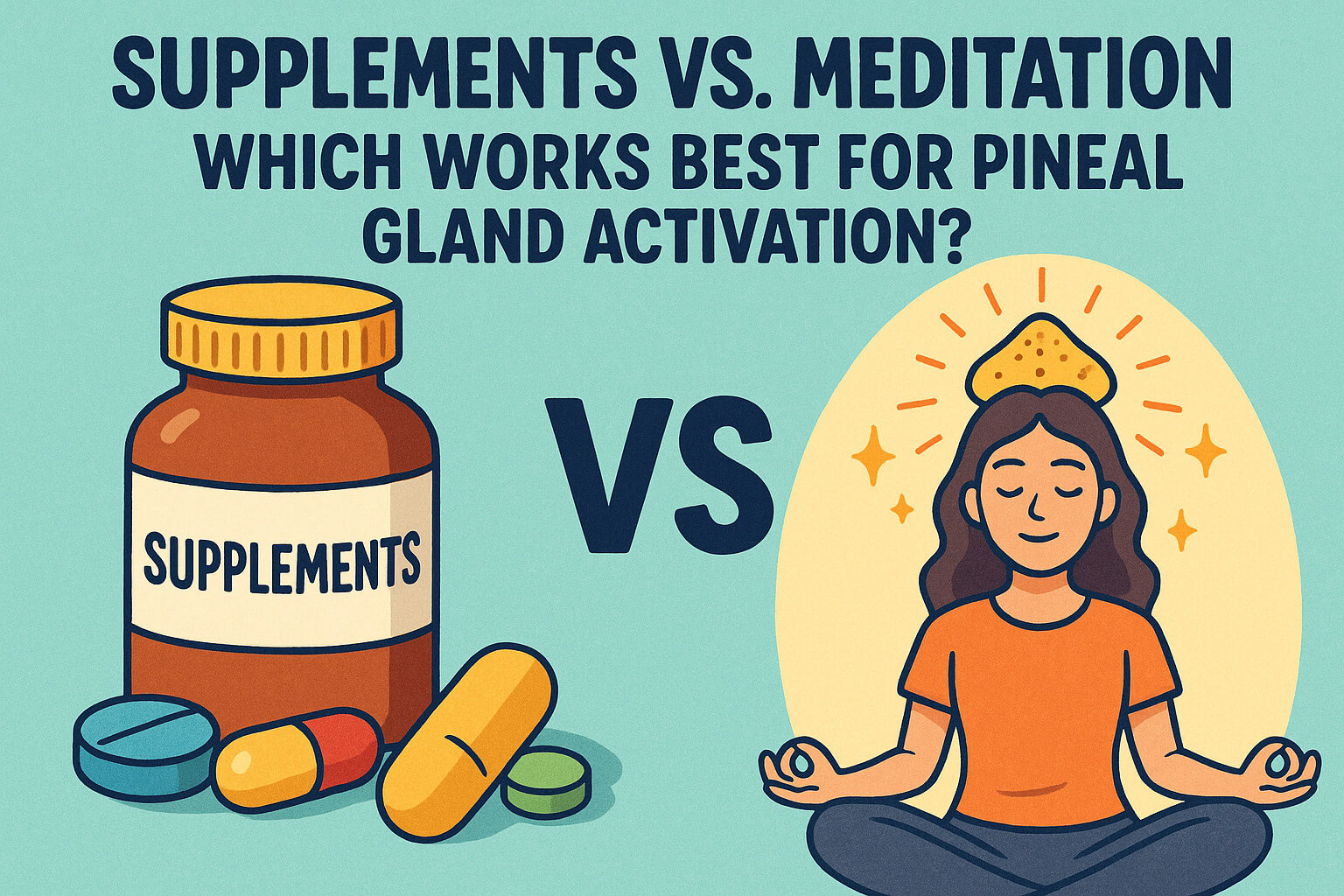
So, instead of chasing dramatic claims, let’s compare two practical approaches people use to support the pineal and the conditions that surround it: supplements and meditation. This article lays out what each one does, when it helps, and how to combine them into a sensible routine. No hype, no grand promises—just a clear path you can test.
What We Mean by “Support”
When We say “support the pineal gland,” We mean creating internal conditions that favor healthy sleep, steady focus, and calmer nights—elements that allow the gland to do its job well. That includes consistent light exposure, a reliable sleep schedule, balanced nutrition, and reducing excessive stress. Both supplements and meditation can contribute to those conditions, but they work very differently.
Meditation: The Skill You Practice
Meditation is not a magic pill. It’s a practice that trains attention, emotion regulation, and nervous system resilience. Think of it as building mental muscle: early sessions feel awkward; over time you become more steady, less reactive, and more present.
How meditation helps
- Improves attention and focus. Frequent short sessions train the mind to return to a point of focus faster. That’s useful during the day and helpful for sleep onset at night.
- Reduces stress reactivity. Practices like mindful breathing shift the nervous system toward a calmer state, which supports better sleep and greater daytime clarity.
- Enhances sleep readiness. A quiet, settled mind is easier to put to rest—especially when combined with a calming evening routine.
What to practice
- Breath-focused meditation (5–15 minutes daily): Sit comfortably and follow the breath. When the mind wanders, notice it and bring attention back.
- Body-scan before bed (5–10 minutes): Move attention slowly through the body and release tension.
- Short reset breaks (1–3 minutes): Use a double-length exhale or a brief focus to reset during the day.
Strengths
- Free, immediate to start, no side effects.
- Benefits compound—practice builds a durable skill.
Limitations
- Requires habit formation. You must practice to receive the benefits.
- Gains are gradual; the first two to four weeks are often the hardest.

Supplements: Tools for the Terrain
Supplements do not “activate” glands; they change biochemical conditions that may make it easier for your body to rest, recover, and regulate. Used intelligently, they can smooth evenings, support sleep timing, and address simple nutritional gaps.
Common supports people use
- Melatonin: A hormone your body produces that signals night. Low doses can help with timing issues (jet lag, shift work). It’s not a nightly long-term fix for everyone.
- Magnesium (glycinate or citrate): Helpful for muscle relaxation and calming in the evenings for some people.
- L-theanine: An amino acid that can promote relaxed alertness—useful before meditation or in the early evening.
- Adaptogens (ashwagandha, holy basil): May help with stress balance, though responses vary.
- Omega-3s (EPA/DHA): Supportive for brain health when dietary intake is low.
Strengths
- Can provide faster, sometimes noticeable relief for sleep or anxiety-related symptoms.
- Useful for targeted, short-term needs (travel, high stress weeks).
Limitations
- Quality, dosing, and interactions matter—always consider medical context.
- Supplements can’t teach attention or build emotional resilience the way meditation does.

Spotlight on Pineal XT: A Targeted Supplement Option
Some people seek supplements specifically formulated to support the pineal gland. Pineal XT is one such product. It combines selected nutrients and botanicals intended to create optimal conditions for pineal health, mental clarity, and focus.
Key aspects of Pineal XT:
- Decalcification Support – Aims to help maintain a healthy pineal environment over time.
- Awakening and Clarity – Users often report feeling more present, focused, and aligned during meditation practices.
Practical advice:
- Use Pineal XT alongside a consistent meditation practice and healthy sleep habits.
- View it as a supportive tool, not a replacement for good lifestyle habits.
- Check ingredient transparency and consult a healthcare professional if you have any medical conditions.

Head-to-Head: Which One Wins?
Time to effect: Supplements can act quickly for sleep timing or relaxation; meditation typically produces gradual, accumulating benefits over weeks.
Durability: Meditation builds a lasting skill set. Supplements usually provide transient effects.
Safety and cost: Meditation is free and has minimal risk. Supplements cost money and carry possible side effects or interactions.
Impact on daily functioning: Meditation improves cognitive control and stress resilience directly. Supplements improve the physiological environment that supports rest and cognitive functioning.
Practical verdict: If you had to pick one that delivers long-term value, choose meditation. It gives you a tool that continues to work without ongoing purchases. Supplements are best thought of as supportive tools—useful, sometimes necessary, but not a substitute for practice.
How to Combine Them Sensibly
You don’t have to choose. The most effective approach for many people is a hybrid one: a regular meditation practice with minimal, targeted supplement support when necessary.
A practical daily routine
- Morning: Expose yourself to natural light within 30–60 minutes of waking. Do a short 5–10 minute meditation to set focus for the day.
- Afternoon: Take 2–3 minutes for a breath-reset when stress builds.
- Evening: Begin dimming lights 60–90 minutes before bed. If you struggle to relax, consider magnesium, L-theanine, or Pineal XT 1–2 hours before bed. Finish with a 5–10 minute body scan meditation.
How to trial supplements
- Introduce one supplement and test it for 30–60 days.
- Start with low doses and observe sleep and daytime clarity.
- Prefer reputable brands and third-party testing.
Quick Answers to Common Questions
Q: Can supplements replace meditation?
A: No. Supplements help create a supportive environment, but they cannot train attention or emotional regulation.
Q: How soon will meditation help my sleep?
A: Some people notice small improvements in 2–3 weeks; deeper changes grow over months.
Q: Which supplement should I start with?
A: Low-dose melatonin or magnesium glycinate are common starting points, depending on your needs. Always consider your personal health and consult a provider if needed.
Final Takeaway
Supporting the pineal gland is ultimately about supporting your rhythm: sleep, light exposure, nutrition, and stress balance. Meditation builds the inner skill to manage attention and stress long-term. Supplements, like Pineal XT, can make the path smoother—especially during rough patches or when seeking enhanced clarity.
If you want a single recommendation: start a short daily meditation practice and use supplements like Pineal XT sparingly and intentionally to support sleep, relaxation, and clarity. Over time, the practice will compound—and your nervous system will repay you with steadier focus, better sleep, and clearer days.